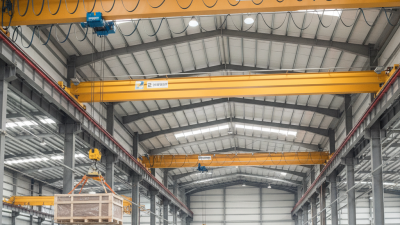
Choosing among China’s leading 2 ton crane manufacturers requires more than comparing prices or catalog photographs. Buyers should examine lifting performance, duty classification, control accuracy, steel quality, after-sales support, and documented factory testing. A 2 ton crane may look compact, yet its braking response and trolley movement can decide whether a workshop operates smoothly or faces costly downtime.
Market evidence supports closer evaluation. The Grand View Research report, “Crane Market Size, Share & Trends Analysis,” identifies manufacturing, construction, and logistics as important demand sectors. Its findings also highlight automation and remote monitoring as major development directions. Fortune Business Insights similarly reports continuing growth in the global crane market, supported by industrial investment and modernization. These reports do not rank individual Chinese suppliers. However, they show why supplier capability matters.
Markku Moilanen, former President and CEO of Konecranes, stated, “Safety is at the heart of everything we do.” That principle should guide this comparison. Reliable manufacturers should provide load-test records, welding procedures, electrical schematics, spare-parts commitments, and clear warranty terms. Buyers should also verify whether the quoted capacity applies to the complete crane system, not only the hoist.
A ranking can still mislead. Factory size does not automatically prove better engineering. Some suppliers communicate well but offer limited field evidence. Others build robust equipment but present weak technical documentation. This overview therefore compares China’s top 2 ton crane manufacturers through practical criteria, including production experience, customization, compliance documentation, component quality, installation support, and customer feedback. The strongest choice is not always the cheapest one. It is the supplier that can demonstrate safe, repeatable lifting performance under real working conditions.
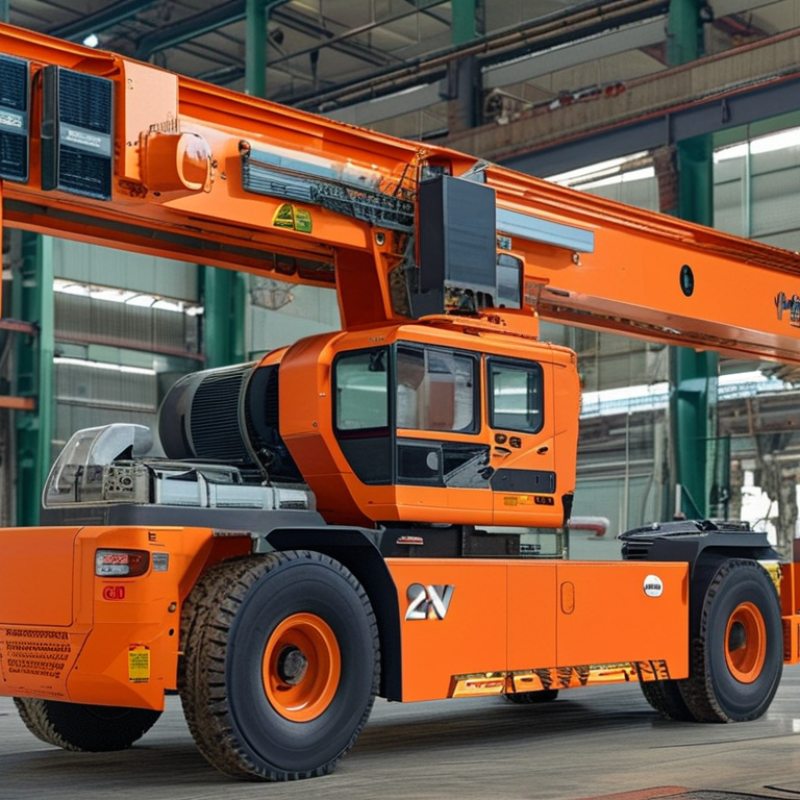
A 2 ton crane lifts loads up to 2,000 kilograms, equal to about 19.6 kilonewtons. Common designs include overhead, gantry, jib, and monorail cranes. They move engines, steel parts, molds, and packed materials across short industrial distances. In a machine shop, the hook may travel over a lathe. In a warehouse, it can position pallets beside a loading bay.
The equipment suits factories, maintenance rooms, construction workshops, and small production lines. Fortune Business Insights reported continued growth in the global overhead crane market in its 2024 industry analysis. This growth reflects demand for safer material handling and reduced manual lifting. However, capacity alone does not prove suitability. Duty cycle, span, lift height, power supply, floor strength, and operating environment matter. A 2 ton crane may lift a heavy motor, but repeated lifting can expose weak components. That detail deserves more attention.
Tips: Check the rated load, hook height, travel speed, and duty classification before comparing manufacturers. Confirm that the runway, support beams, brakes, controls, and limit switches match the intended workload. OSHA guidance emphasizes inspection, training, and safe operating procedures for overhead lifting equipment. Keep people outside the suspended-load area. Always. Cost estimates should include installation, testing, maintenance, and operator training. Manufacturers with clear inspection records and service documentation usually offer stronger long-term reliability, though no supplier should be judged by price alone.
When evaluating China’s 2 ton crane manufacturers, begin with the working conditions, not the sales brochure. A reliable supplier should discuss lifting frequency, span, lifting height, indoor temperature, and power supply. These details affect motor size, brake performance, trolley design, and structural safety. Ask for drawings with clear dimensions. Check whether the proposed crane suits your actual building.
Experience is visible in testing records. Request load-test reports, welding procedures, material certificates, and inspection records for critical components. The manufacturer should explain how each 2 ton crane is tested before shipment. Watch for traceable serial numbers and consistent documentation. Documents matter. A factory visit can reveal assembly discipline, storage conditions, and the quality of electrical wiring. I would inspect several finished cranes, not just the cleanest example prepared for visitors.
After-sales support deserves the same attention as production quality. Confirm response times, spare-parts availability, installation guidance, and maintenance training. Ask for a written warranty with practical limits. A serious technical team will explain common failures instead of promising trouble-free operation. That honesty is useful. It also helps compare total ownership costs, including inspections, replacement brakes, and downtime. Some manufacturers may offer a lower initial price, but their manuals can be vague or incomplete. That weakness should not be ignored. Request references from similar factories and verify whether their cranes have operated under comparable duty cycles. A careful evaluation combines evidence, technical questions, and direct observation.
The following scorecard provides an objective method for evaluating manufacturers of 2 ton cranes without ranking or displaying individual company or brand data. Buyers can compare documented capabilities, compliance records, engineering quality, and after-sales support using the same criteria.
| No. | Evaluation Dimension | Practical Benchmark for a 2 Ton Crane | Documents or Evidence to Request | Weight | Evaluation Method |
|---|---|---|---|---|---|
| 1 | Rated Lifting Capacity | Rated load: 2,000 kg, with the working load limit clearly marked on the crane and hoist. | Load chart, nameplate photograph, technical datasheet, and factory test records. | 15% | Confirm that the rated capacity applies to the complete crane system, not only the hoist. |
| 2 | Design and Structural Safety | Design calculations should cover beam strength, wheel loads, deflection, fatigue, brakes, end stops, and overload protection. | Signed calculations, general arrangement drawing, finite-element analysis where applicable, and safety-factor information. | 15% | Give the highest score when calculations are project-specific and independently reviewed. |
| 3 | Applicable Standards | The design should identify the standards used, such as GB/T 3811 for crane design, GB/T 5905 for testing, or EN/ISO standards for the destination market. | Standards list, compliance statement, risk assessment, and inspection procedure. | 12% | Check whether the selected standards match the installation country and intended application. |
| 4 | Quality Management | A documented quality-management system, traceable inspections, and controlled welding, painting, electrical, and assembly processes. | Valid ISO 9001 certificate, internal inspection records, material certificates, and nonconformity procedures. | 10% | Verify certificate scope, issuing body, validity, and whether it covers crane manufacturing. |
| 5 | Load and Functional Testing | For a 2,000 kg rated crane, the applicable acceptance procedure may include a static test at 1.25 times rated load and a dynamic test at 1.10 times rated load, subject to the governing standard. | Factory acceptance test report, calibrated load-cell certificate, brake test, travel test, and emergency-stop test. | 12% | For reference, 1.25 × 2,000 kg equals 2,500 kg and 1.10 × 2,000 kg equals 2,200 kg; confirm the exact legal requirement locally. |
| 6 | Hoist and Drive Configuration | The configuration should match the duty cycle, lifting speed, travel speed, lifting height, span, control method, and available power supply. | Motor data, duty classification, gearbox details, brake specifications, duty-cycle calculation, and electrical schematic. | 10% | Reject quotations that state only “2 ton” without defining operating duty and site conditions. |
| 7 | Electrical and Operator Safety | Essential features include an emergency stop, upper and lower limit protection where applicable, overload protection, phase protection, grounding, and clearly labeled controls. | Electrical schematic, control-panel photographs, protection list, risk assessment, and user manual. | 10% | Check that safety functions are tested and that replacement components are identified by specification. |
| 8 | Customization and Site Compatibility | The manufacturer should be able to adapt span, lifting height, runway length, indoor or outdoor installation, ambient temperature, and voltage. | Site survey form, interface drawing, foundation or runway requirements, and environmental limitations. | 8% | Score based on the completeness and accuracy of the proposed site-specific design. |
| 9 | Documentation and Traceability | A complete delivery file should allow the owner to identify components, operate the crane safely, and plan inspections and maintenance. | Manuals, drawings, spare-parts list, inspection certificates, warranty terms, and maintenance schedule. | 4% | Award full points only when documents are supplied in the buyer’s required language and format. |
| 10 | Warranty and After-Sales Service | Support should include commissioning guidance, troubleshooting, spare-parts availability, response procedures, and clearly defined warranty exclusions. | Written warranty, service-level agreement, spare-parts quotation, remote-support process, and service references. | 4% | Prefer measurable response times and documented service channels over informal promises. |
| Total Evaluation Weight | 100% | Use a 0–10 score for each dimension and multiply by its weight. | |||
Chinese manufacturers known for 2-ton cranes are usually concentrated in established lifting-equipment clusters, especially Henan, Jiangsu, Shandong, and Zhejiang. These producers commonly supply single-girder overhead cranes, workstation cranes, gantry cranes, and electric hoists for factories, warehouses, and maintenance workshops. Their strongest advantage is flexible engineering. A 2-ton crane can be configured for a 6-meter span, low headroom, outdoor use, or frequent lifting cycles. That flexibility matters more than a low catalogue price.
Industry reports support this manufacturing depth. MarketsandMarkets estimates the global crane market will grow steadily through 2028, driven by construction, logistics, and industrial automation. A 2023 Research and Markets assessment also identifies Asia-Pacific as the largest regional crane market. However, market size does not prove product quality. A catalogue is not proof. Buyers should request load-test records, motor and brake specifications, welding procedures, and inspection certificates. ISO 9001 registration can indicate process control, but it does not replace testing.
Experienced Chinese suppliers usually explain duty classification, travel speed, control options, and installation limits before quoting. They should also clarify whether the rated capacity includes the hook block and lifting accessories. That detail is often missed. For export projects, verify applicable GB/T, ISO, FEM, or destination-market requirements with an independent inspector. Factory photographs are useful, but production records are stronger evidence. In practice, the best choice is a manufacturer that documents engineering decisions clearly, even when its first proposal needs revision.
For buyers comparing China’s 2 ton crane manufacturers, rated capacity is only the starting point. A 2024 overhead crane market report by MarketsandMarkets identifies safety systems, automation, and lifecycle service as major purchasing factors. Compare the duty classification under ISO 4301, not just the advertised two-ton capacity. Check lifting speed, travel speed, braking distance, gearbox design, and motor insulation. A 2 ton crane handling steel coils needs stronger duty performance than one lifting cartons twice daily.
Certification deserves careful checking. ISO 9001 supports documented quality control, but it does not certify the crane’s lifting performance. Request the exact test certificate for each finished unit. It should show serial number, test load, date, inspector, and measured results. For European projects, verify CE conformity and EN 13001 design compliance. For North American sites, compare ASME B30.2 alignment and OSHA 1910.179 requirements. Local electrical certificates also matter. Voltage errors can damage controls before the first inspection.
Look closely at upper and lower limit switches, emergency stops, overload protection, pendant or radio controls, and hook safety latches. Ask whether the control cabinet has a suitable IP rating for dust or moisture. Maintenance access is practical evidence of engineering quality. I would also inspect weld records and spare-parts availability. A certificate can look reassuring. It may cover the factory, not your crane. Independent pre-shipment inspection is worth considering, although small projects sometimes underestimate its value.
Selecting the right China 2 ton crane supplier requires more than comparing online prices. Define the lifting height, span, duty cycle, travel distance, and working environment first. A workshop crane may need different protection from a crane used near moisture or dust. Ask the supplier to calculate the wheel load, motor capacity, braking distance, and structural safety margin for your layout.
Look for manufacturers with documented engineering experience and clear quality procedures. Request drawings, material certificates, welding inspection records, and load-test reports. A reliable supplier should explain which components are used and how replacements remain available. Check whether technicians can support installation, commissioning, operator training, and later maintenance. Small details matter. For example, inspect cable routing, pendant protection, limit switches, and emergency stop access.
Do not select a supplier from a polished catalogue alone. Arrange a factory video inspection or an independent pre-shipment inspection. Compare the quoted specification with the actual test condition. A 2 ton rating does not describe every operating situation. I have seen buyers focus on price and overlook service response time. That decision can become expensive. No checklist is perfect. Leave room to question unclear promises, revise the technical specification, and confirm every requirement in writing before production.
Recommended evaluation weighting for comparing qualified manufacturers
When comparing 2 ton crane suppliers, prioritize verified load capacity and compliance, structural and component quality, after-sales support, delivery capability, and total cost. The percentages represent a practical purchasing framework and should be adjusted to match the lifting environment, duty cycle, installation requirements, and local safety regulations.