How to Choose the Right Boom Crane for Your Construction Needs?
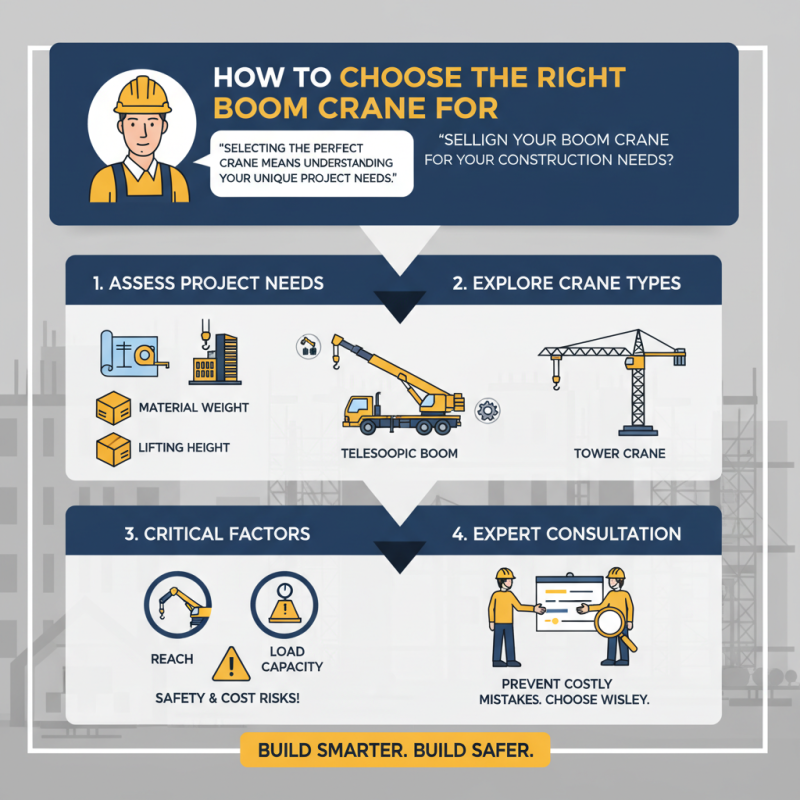
Choosing the right boom crane for construction can be daunting. Many factors come into play. As John Smith, a leading expert in the boom crane industry, once said, "Selecting the perfect boom crane means understanding your unique project needs." This simple truth highlights the complexity behind this process.
Boom cranes come in various types and sizes. Each is designed for specific tasks. The choice often depends on the weight of materials and the height required for lifting. It is crucial to assess your project’s demands carefully. Many builders make hasty decisions. They overlook critical factors such as reach and load capacity. This can lead to safety issues and increased costs later on.
Construction projects can be unpredictable. Not every boom crane will fit all scenarios. It’s easy to regret a purchase made without thorough research. Experts recommend consulting with professionals. Gathering insights can help prevent costly mistakes. Each project is different, and so are the requirements. Taking the time to choose wisely will pay off in the long run.
Understanding the Different Types of Boom Cranes Available
When selecting a boom crane for construction, understanding the types available is crucial. Boom cranes come in various forms. Each type has its strengths and weaknesses. Familiarizing yourself with these options can prevent costly mistakes.
Mobile boom cranes are versatile. They can navigate difficult terrains easily. This makes them suitable for various job sites. However, they may lack the lifting capacity of larger models. Consider the terrain and space availability before deciding.
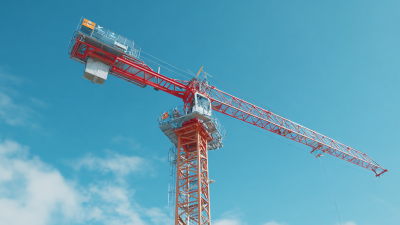
Another option is the tower crane. Tower cranes are tall and powerful. They are ideal for high-rise buildings. Yet, they require more setup time and space. Think about your project timeline and site constraints.
Tips: Always evaluate your project needs first. What materials will you lift? Do you have enough space? Also, consult with your team. Their insights can highlight overlooked factors.
Sometimes, the perfect choice appears clear, but it may lead to challenges down the road. Lack of maneuverability could become a problem. Reflect on your choices carefully before making a decision.
Evaluating Load Capacity Requirements for Your Construction Project
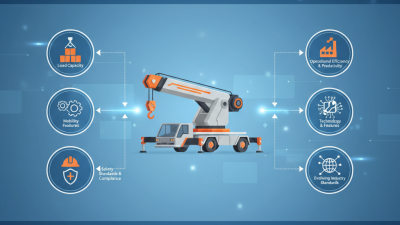
When choosing a boom crane, understanding load capacity is crucial. The load capacity must align with your project's demands. Consider the maximum weight you will be lifting. This includes the weight of materials, equipment, and any additional safety factors. It's easy to underestimate this need, which can lead to dangerous situations.
Assessing the ground conditions is also essential. Soft or uneven ground may require a crane with a lower capacity than expected. Minimum capacities must be calculated based on the specific site. Failure to do so can result in equipment failure and delays. Additionally, reviewing the boom's reach is important for proper functionality. It should comfortably fit within the project boundaries.
It's worth remembering that a higher capacity crane might not always be necessary. Oversized equipment can lead to increased costs and logistical challenges. Evaluating your actual needs is key. Mistakes here can hinder the efficiency of the entire project. Regular reviews of equipment requirements throughout the project's timeline can help avert issues. Be prepared to adjust plans as conditions change.
Load Capacity Requirements for Boom Cranes in Construction Projects
Assessing Reach and Height Specifications for Optimal Performance
Choosing the right boom crane for construction projects is crucial.
Assessing reach and height specifications is essential for optimal performance.
A crane’s reach determines how far it can extend. The height impacts how high it can lift materials.
When you select a boom crane, these factors can make a significant difference.
Consider your project requirements. If you need to lift heavy materials to great heights, make sure the boom crane can meet that demand.
Think about the boom's extension capabilities too.
For instance, some cranes excel in tight spaces but may lack height. Always measure your site before choosing a crane.
It can be tricky to find the right balance. You might find a crane that meets height but struggles with reach.
Reflect on your site's specific challenges. Assess how the crane will maneuver around obstacles.
It’s wise to discuss specifications with experts. Their insights can help you avoid costly mistakes.
In the end, it’s about matching the crane’s capabilities to your project’s needs.
Considering Terrain and Site Conditions for Crane Selection
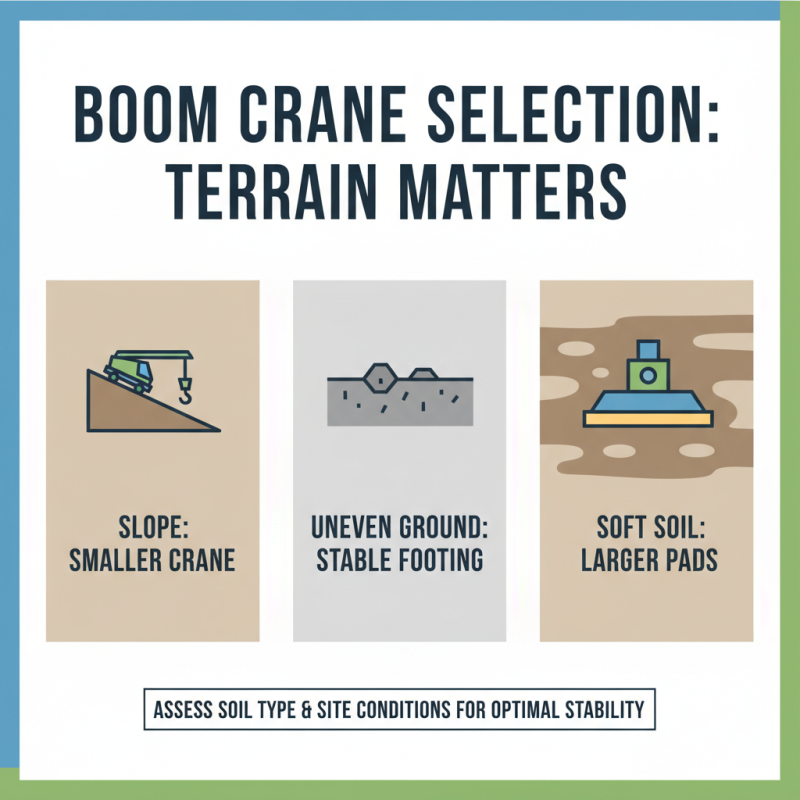
Choosing the right boom crane depends heavily on terrain and site conditions. Uneven ground can present a challenge. Cranes need stable footing. If the site is on a slope, a smaller crane may be necessary. Assessing the soil type is crucial. Soft ground can sink under heavy loads. A crane with larger pads may be required.
Consider obstacles present at the site. Trees, buildings, and power lines can impede operation. You might need to account for a longer reach. This can affect your crane selection. Poor visibility also poses risks. Operators should have a clear line of sight. This might require extra equipment for safety.
Weather conditions play a role, too. Wind can drastically affect crane stability. Rain can make ground conditions worse. It's worth being cautious about these variables. Always inspect the site thoroughly before making a decision. Sometimes, relying on general guidelines isn’t enough. Each site is unique, and so are its challenges. Tailoring your crane choice to these specific conditions is vital for safety and efficiency.
Analyzing Cost Factors and Budget Constraints in Crane Choices
Choosing the right boom crane involves navigating various cost factors. A report by the American Equipment Manufacturers Association indicates that the initial purchase price is only part of the total cost. Budget constraints demand a thorough analysis of operational expenses, maintenance, and training costs.
Survey data shows that labor costs can account for up to 30% of a project's total budget. The complexity of crane operation impacts crane choice and training needs. A crane with advanced technology may reduce labor time but increase upfront costs. Balancing these elements is essential for effective budgeting.
In addition, fluctuating fuel prices can significantly affect operational costs. According to industry statistics, fuel expenses can escalate by 15% during peak construction seasons. This unpredictability can strain budget plans. Contractors should consider these factors when selecting a boom crane. Reflect on your specific project requirements. What is your budget? How often will the crane be used? These questions matter.
How to Choose the Right Boom Crane for Your Construction Needs?
| Crane Type |
Max Load Capacity (tons) |
Operating Radius (meters) |
Cost per Day ($) |
Fuel Efficiency (liters/hour) |
| Telescopic Boom Crane |
10 |
24 |
500 |
12 |
| Knuckle Boom Crane |
8 |
20 |
450 |
10 |
| Rough Terrain Crane |
12 |
30 |
600 |
15 |
| Crawler Crane |
20 |
40 |
800 |
20 |
| Truck Mounted Crane |
15 |
25 |
700 |
18 |